

10 Million Switzerland
September 6, 2026
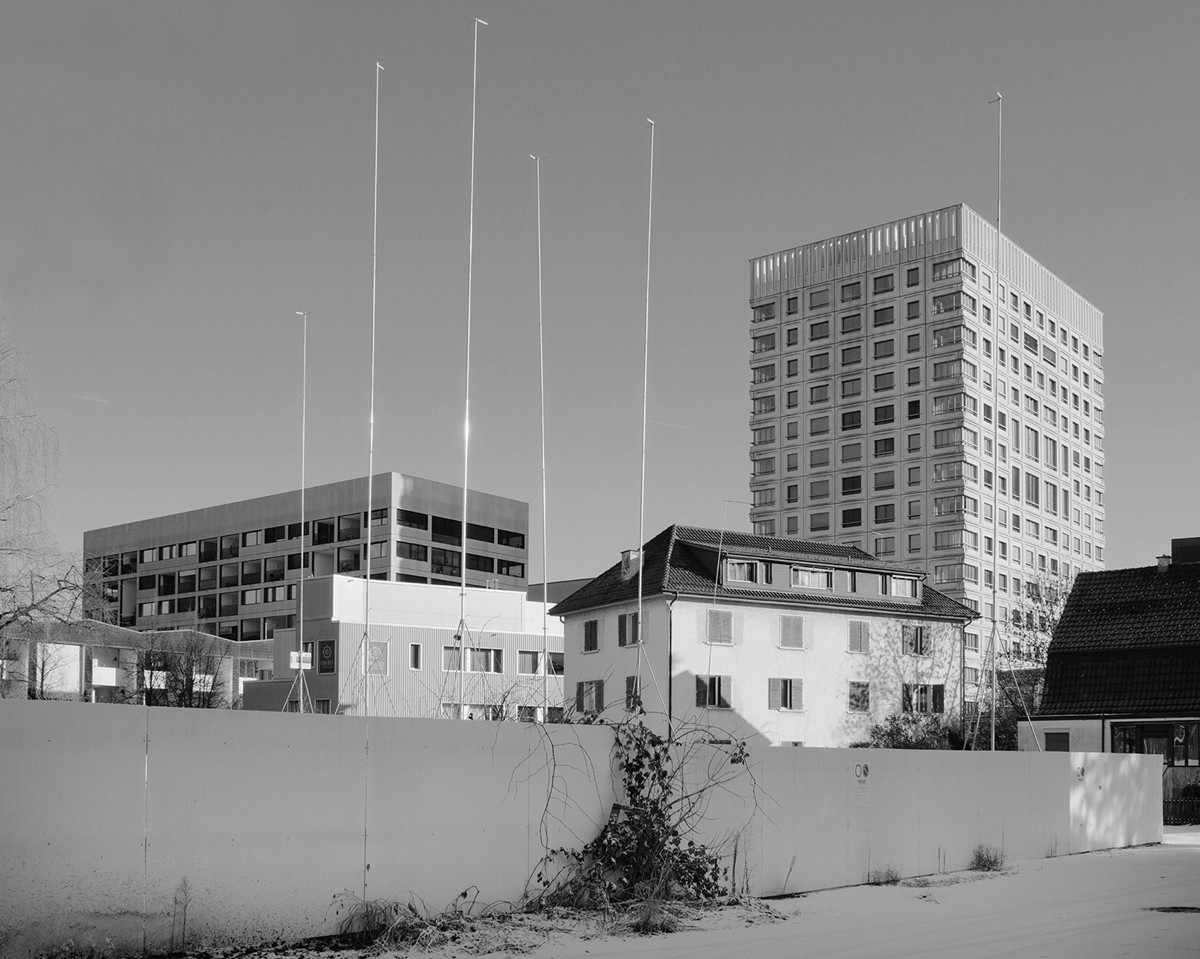
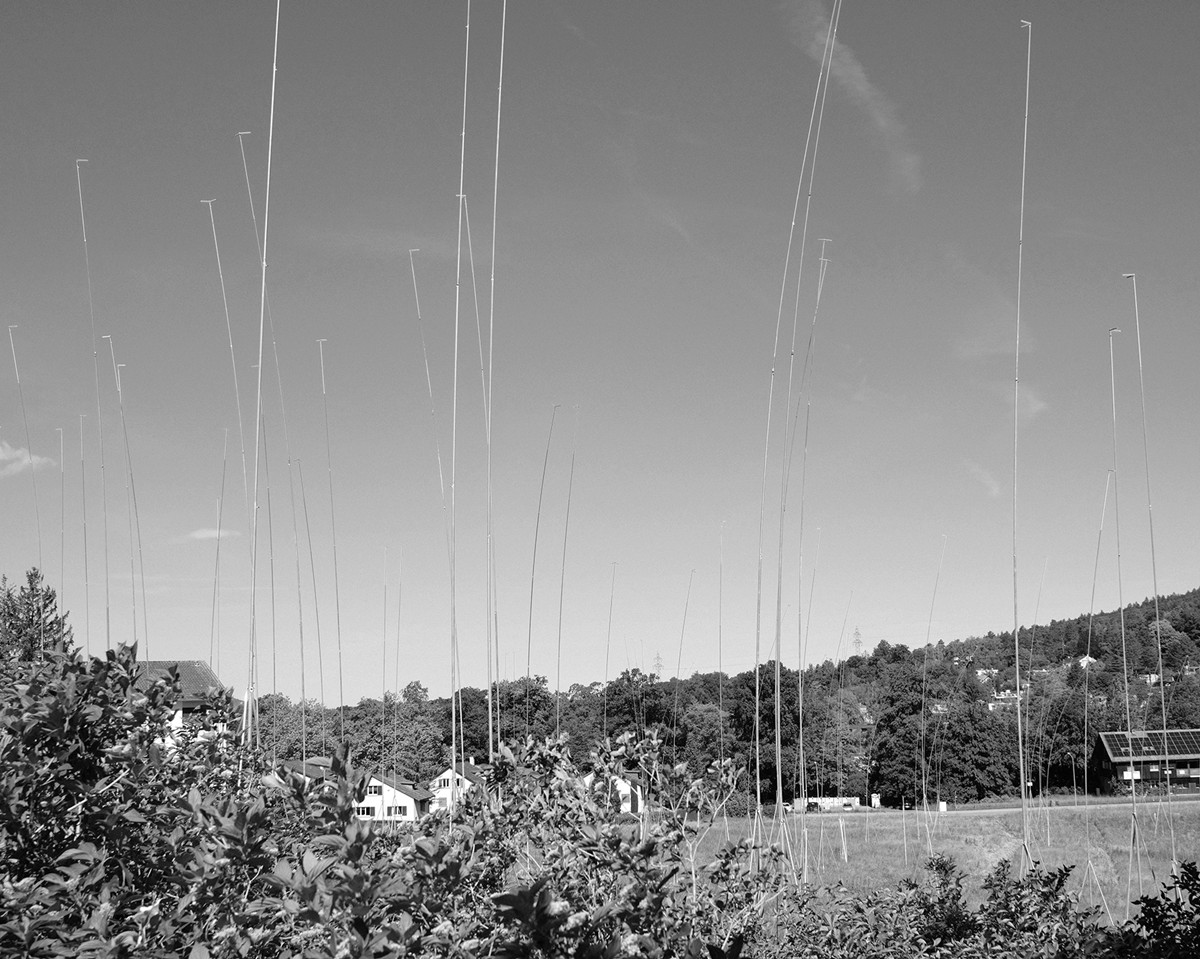
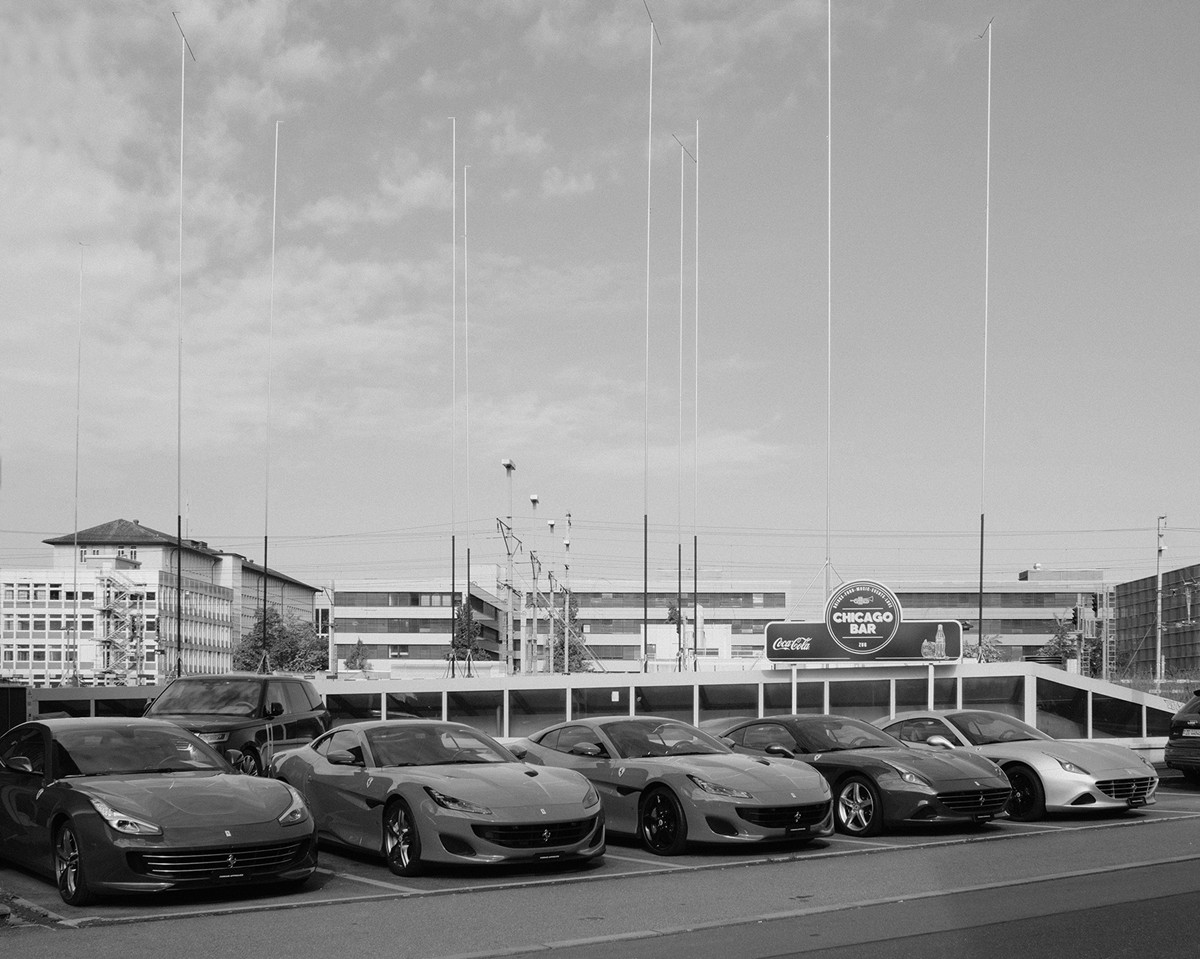
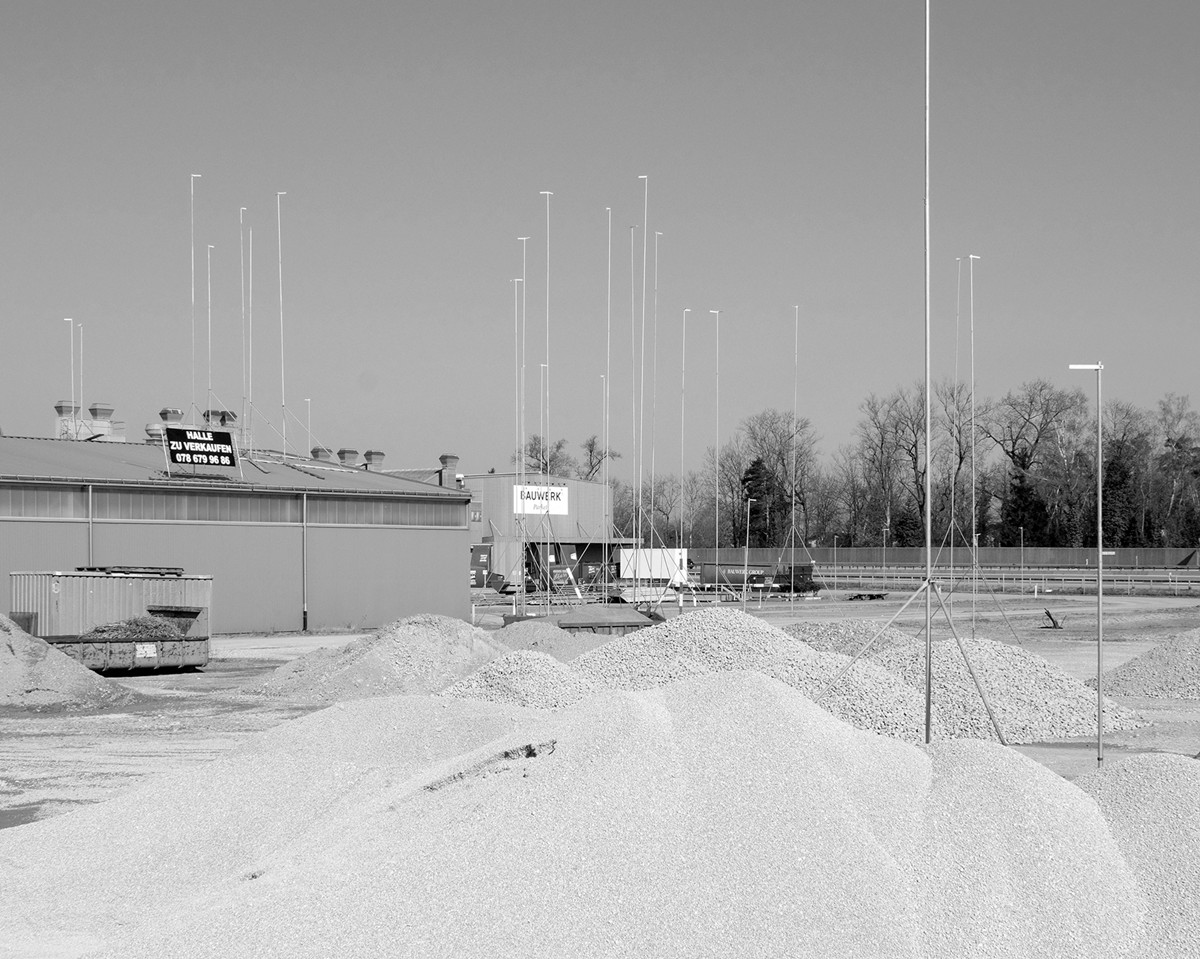
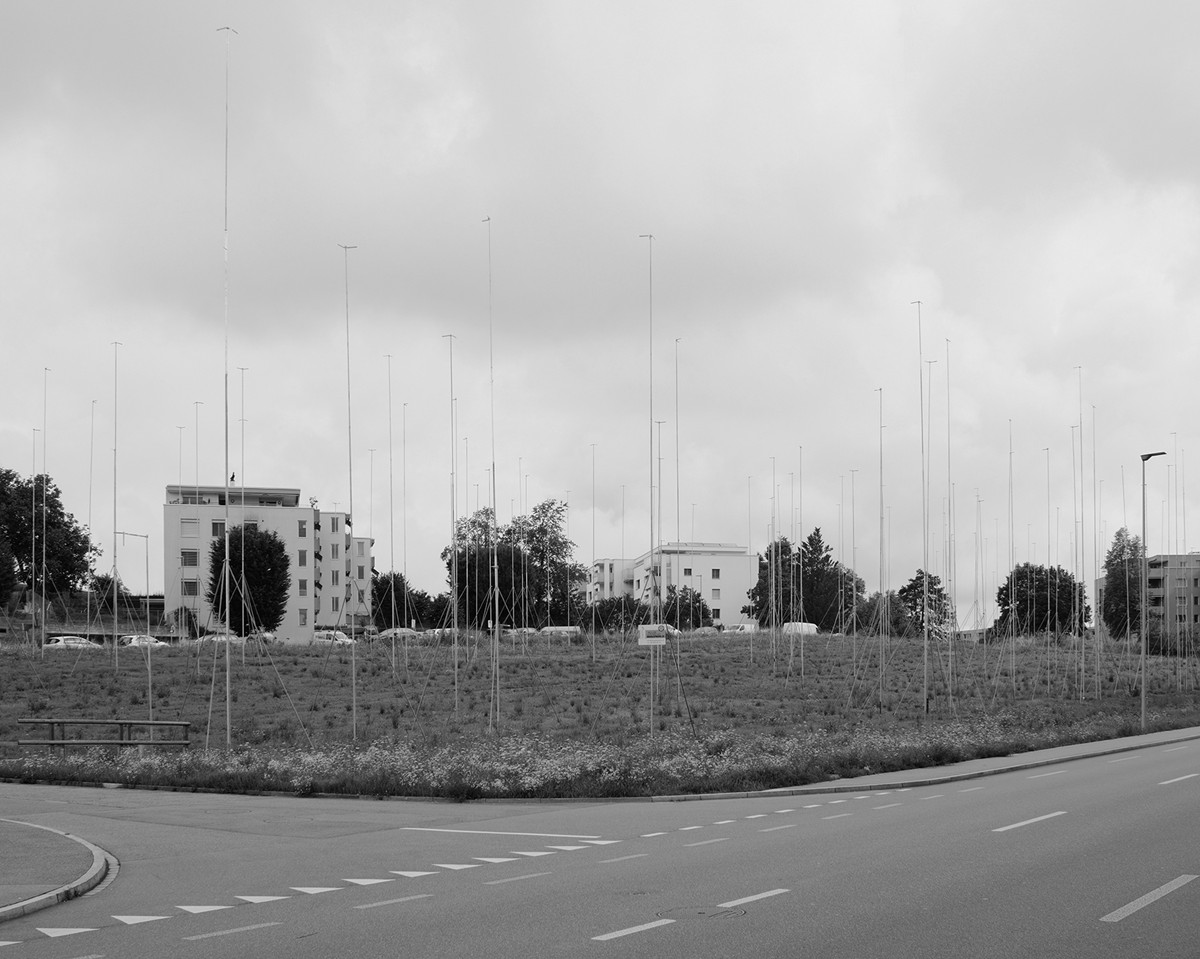
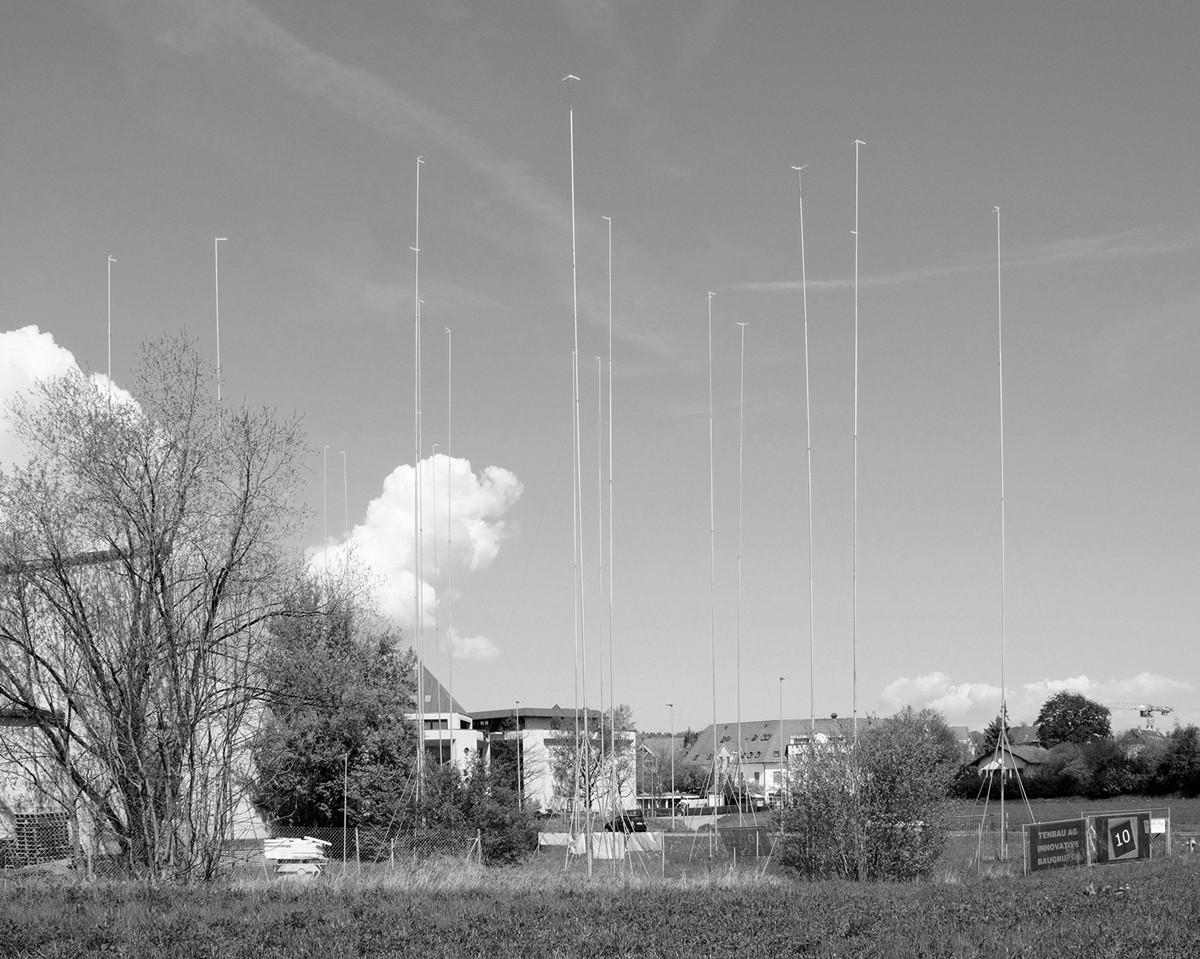
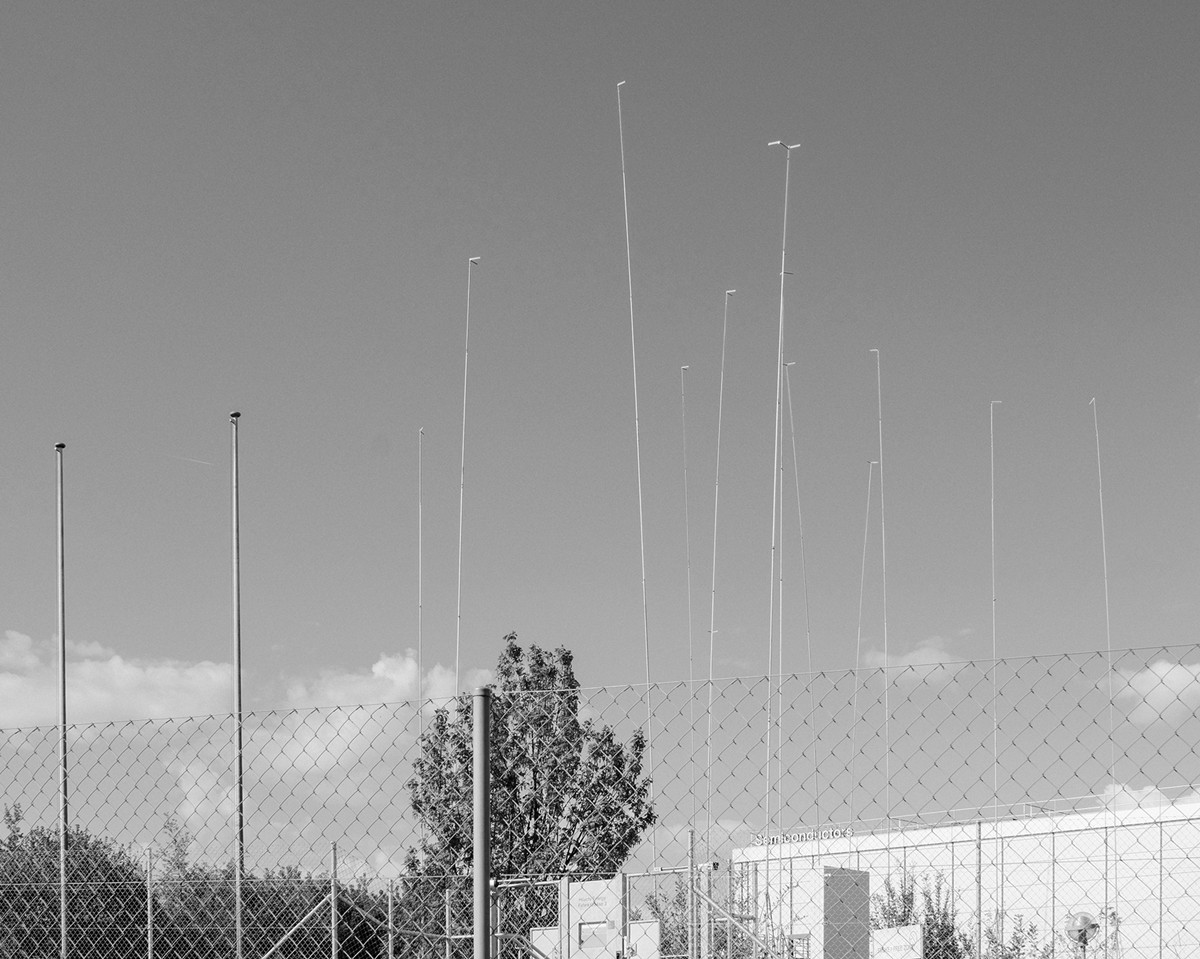
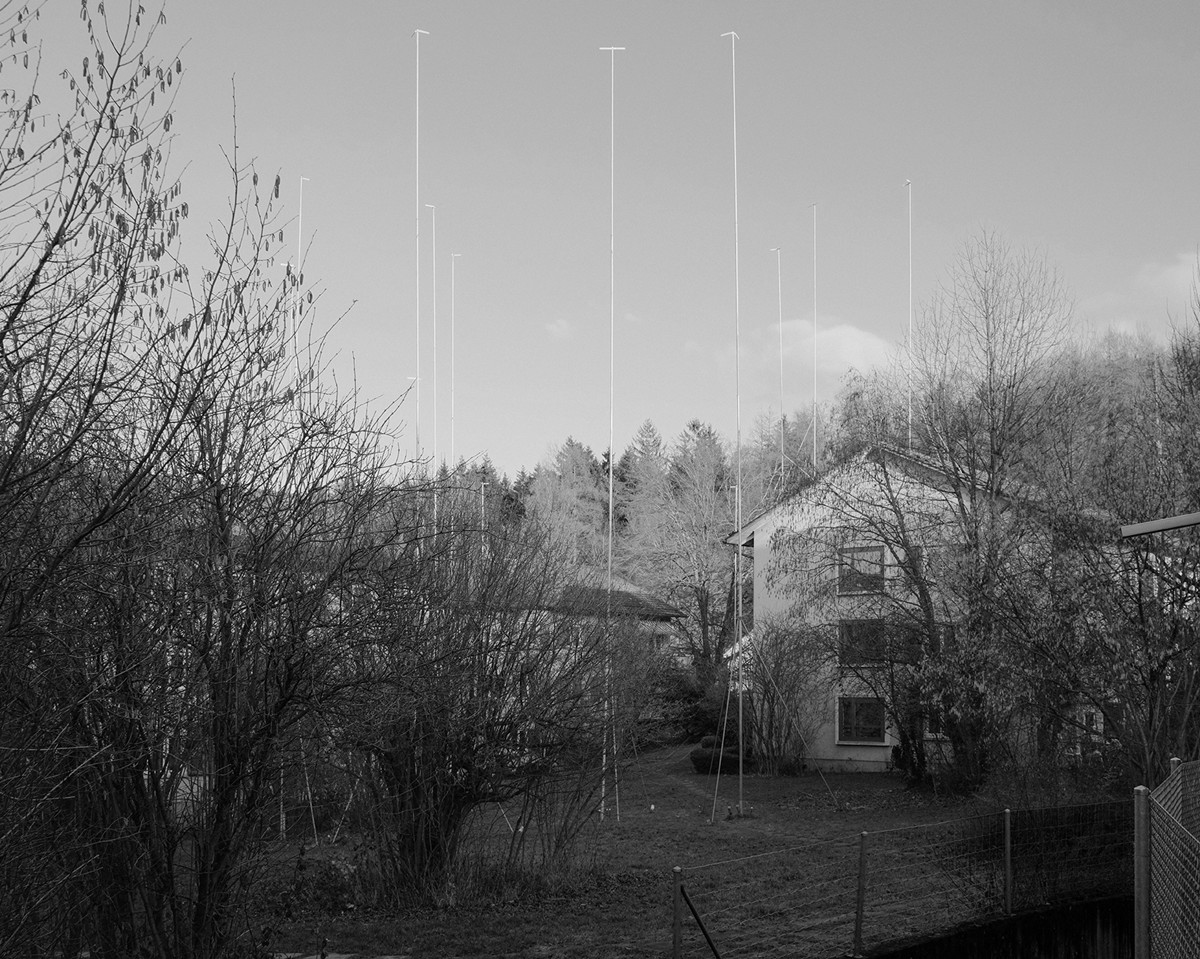
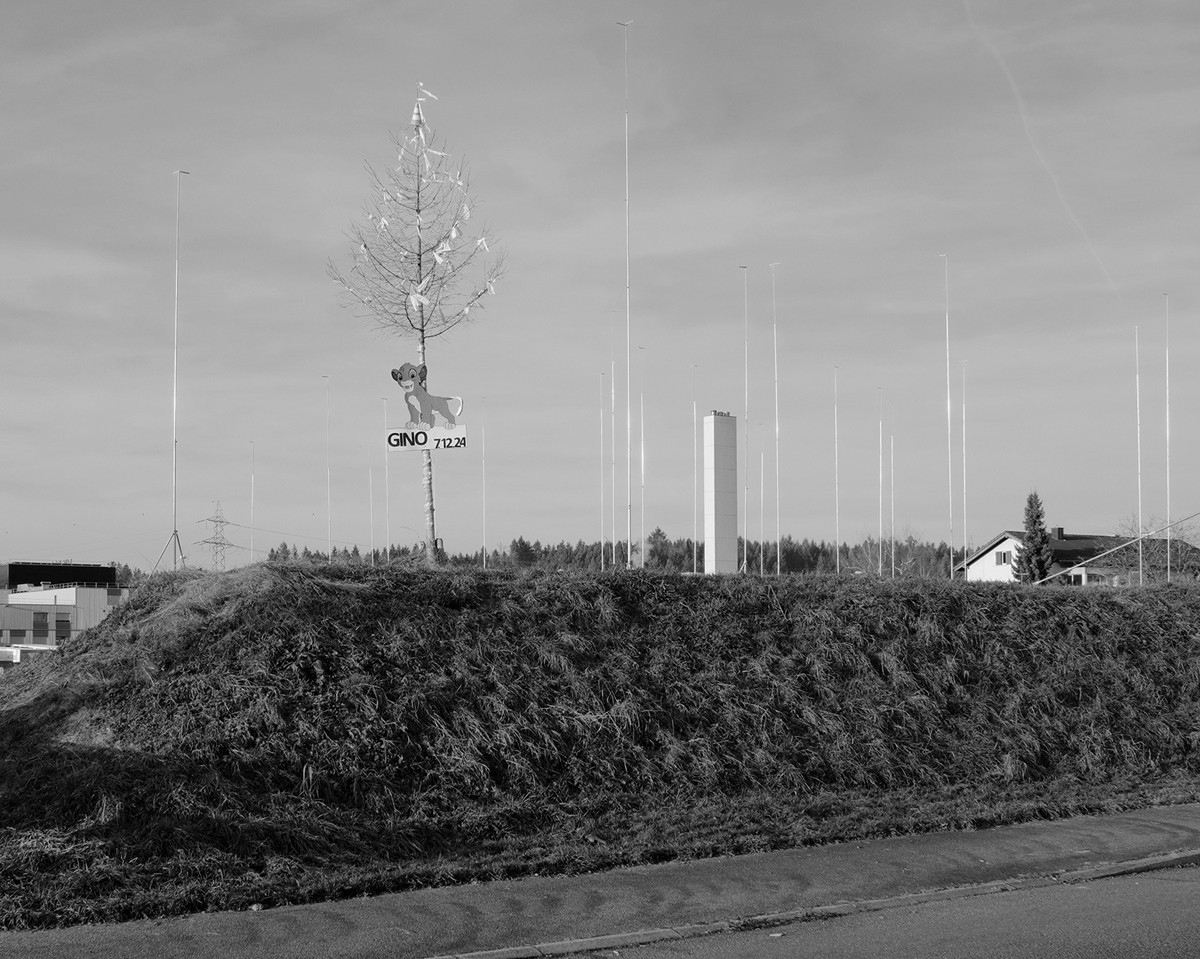
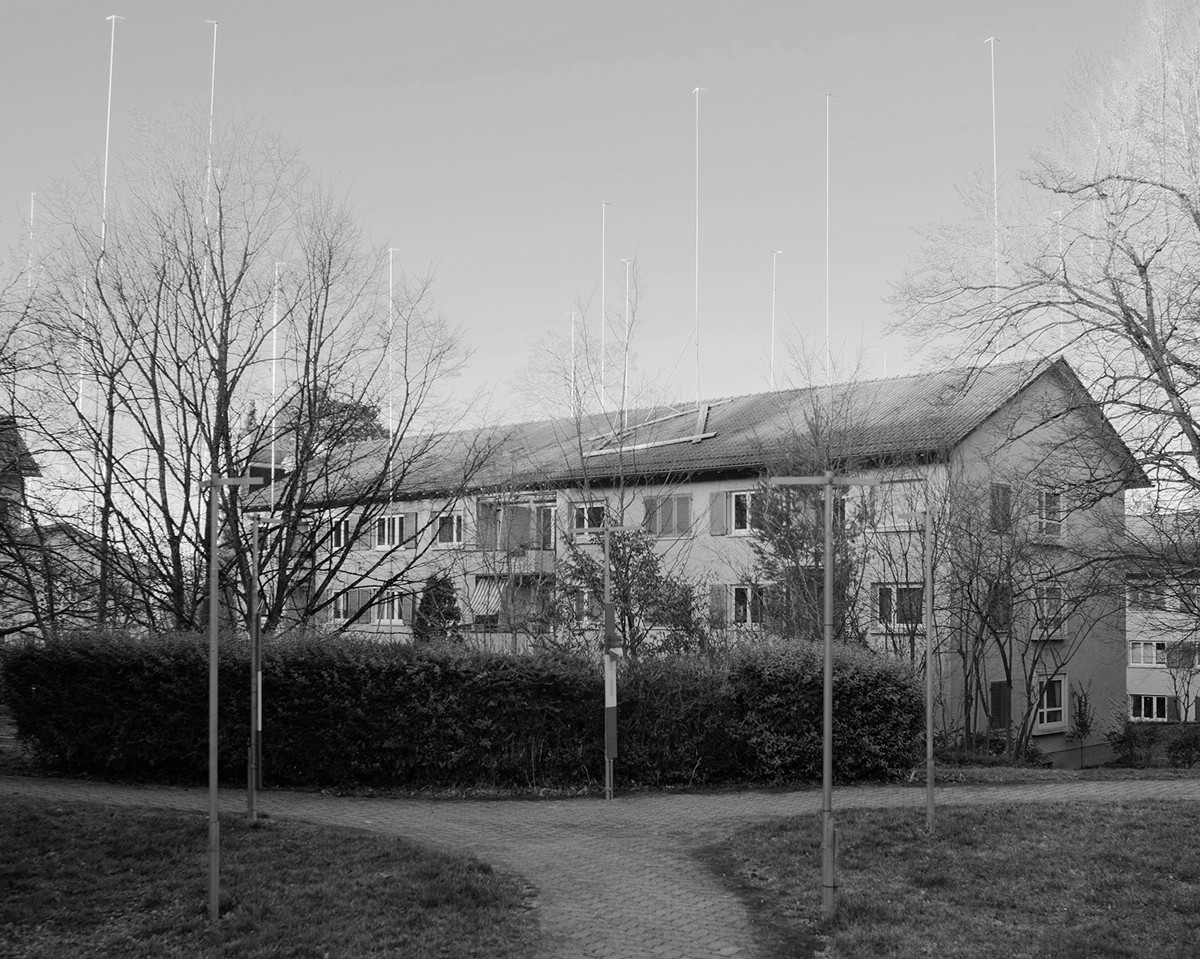
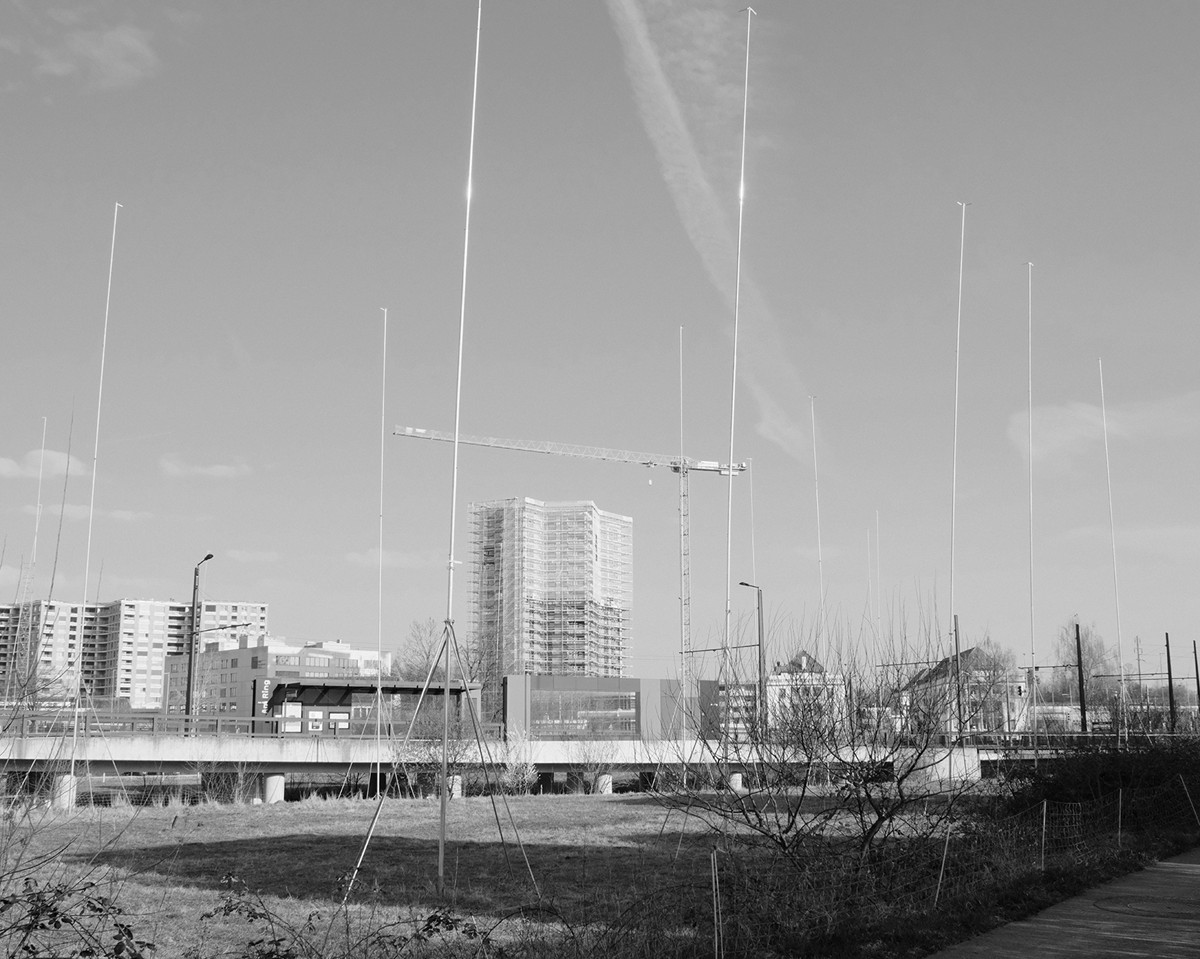
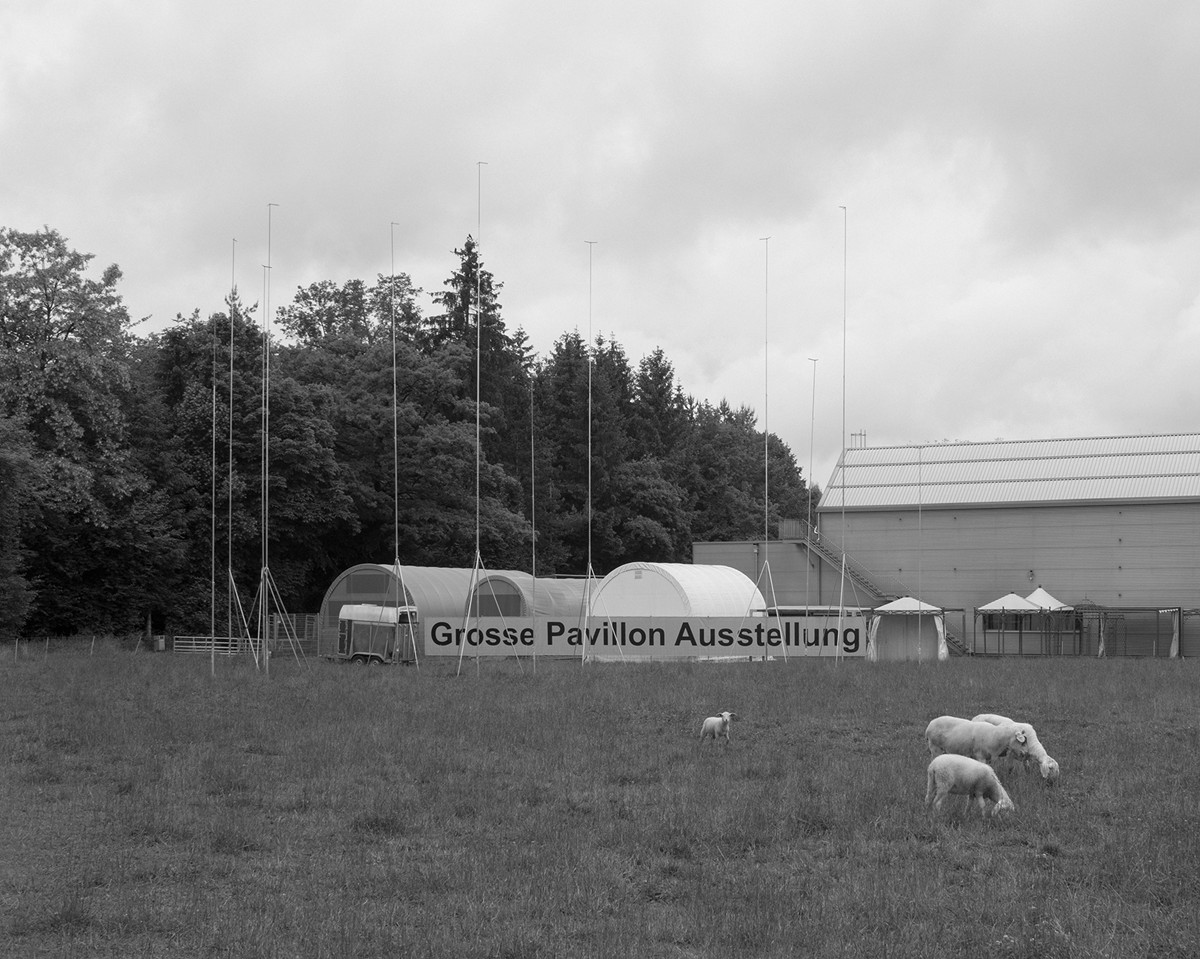
In Switzerland, every construction project must first appear as a drawing in space. Thin poles outline the future volume of a building at full scale, before anything is built. For weeks or months, these fragile, almost immaterial structures rise from meadows, parking lots, empty plots, or above existing buildings that are about to be torn down and replaced.
This temporary presence reflects a distinctively Swiss approach to planning, where future construction is made visible in space as part of a transparent approval process. During this period, objections can be filed, discussions opened, and decisions contested. The future of a site is not only negotiated on paper or behind closed doors. Planning becomes visible, and space itself becomes negotiable.
What appears instead is abstraction: a fragile arrangement of lines reaching upward. They rise into thin air, provisional and unresolved. There is no solid shape, only an outline. Slight, difficult to grasp — not imposing itself, requiring attention. In this abstraction, I see something broader, a wider sense of what could be. What they suggest is a possibility, rather than a form.
I began following these structures against the backdrop of a broader public debate in Switzerland about immigration and population growth. The country’s population has increased rapidly, driven in large part by immigration. Questions about how many people Switzerland can or should accommodate have moved to the centre of political discussions, including an initiative* calling for a cap on the total population.
These debates are closely linked to a growing shortage of affordable housing and to questions about how space is being used and built. Land is scarce, rents are rising, and pressure on available housing has intensified. At the same time, there is no consensus on how to respond. While densification and taller buildings are widely discussed as necessary solutions, they are often resisted in practice. Many people favour low-rise housing and individual homes, even as such preferences consume large amounts of land.
What is being negotiated is not only housing supply, but a vision of how Switzerland should look and how people want to live in the future. Between a country that seeks to limit and contain its growth and one that remains open, continuing to attract new arrivals, different futures are projected onto the same space.
What interests me is the moment before certainty. Before concrete replaces air. Before possibilities become specific outcomes. In these structures, I see multiple possibilities at once.
Years later, when the poles are gone and the sites revisited, this moment of openness has passed. What remains is something more fixed, shaped by constraints, compromises, or habit. The question then is not only what has taken shape, but what remains of that earlier sense of possibility, and what has been left behind.
Ralph Steinegger - @_ralphs_
This temporary presence reflects a distinctively Swiss approach to planning, where future construction is made visible in space as part of a transparent approval process. During this period, objections can be filed, discussions opened, and decisions contested. The future of a site is not only negotiated on paper or behind closed doors. Planning becomes visible, and space itself becomes negotiable.
What appears instead is abstraction: a fragile arrangement of lines reaching upward. They rise into thin air, provisional and unresolved. There is no solid shape, only an outline. Slight, difficult to grasp — not imposing itself, requiring attention. In this abstraction, I see something broader, a wider sense of what could be. What they suggest is a possibility, rather than a form.
I began following these structures against the backdrop of a broader public debate in Switzerland about immigration and population growth. The country’s population has increased rapidly, driven in large part by immigration. Questions about how many people Switzerland can or should accommodate have moved to the centre of political discussions, including an initiative* calling for a cap on the total population.
These debates are closely linked to a growing shortage of affordable housing and to questions about how space is being used and built. Land is scarce, rents are rising, and pressure on available housing has intensified. At the same time, there is no consensus on how to respond. While densification and taller buildings are widely discussed as necessary solutions, they are often resisted in practice. Many people favour low-rise housing and individual homes, even as such preferences consume large amounts of land.
What is being negotiated is not only housing supply, but a vision of how Switzerland should look and how people want to live in the future. Between a country that seeks to limit and contain its growth and one that remains open, continuing to attract new arrivals, different futures are projected onto the same space.
What interests me is the moment before certainty. Before concrete replaces air. Before possibilities become specific outcomes. In these structures, I see multiple possibilities at once.
Years later, when the poles are gone and the sites revisited, this moment of openness has passed. What remains is something more fixed, shaped by constraints, compromises, or habit. The question then is not only what has taken shape, but what remains of that earlier sense of possibility, and what has been left behind.
Ralph Steinegger - @_ralphs_
© CTypeMag 2016 - 2026

