I received photobooks from Somsak Pattanapitoon which is a collection I have known about for a very long time, but I had never seen the entire set until now. The book is titled "Rak Thai, รากไทย - The Base of Siam" (2005–2007). Looking through the complete collection, I learned that it is actually part of a trilogy, consisting of The Base of Siam, Sukho+Thai, and Muang Krung Muang Thep. Together, they form "Sam Krung," representing three historic Thai capitals. This trilogy is a must-have and a crucial study for anyone interested in Thai photobooks, mainly because it carries a deep underlying concept that goes far beyond the conventional beauty typical of Thai photography from that era.
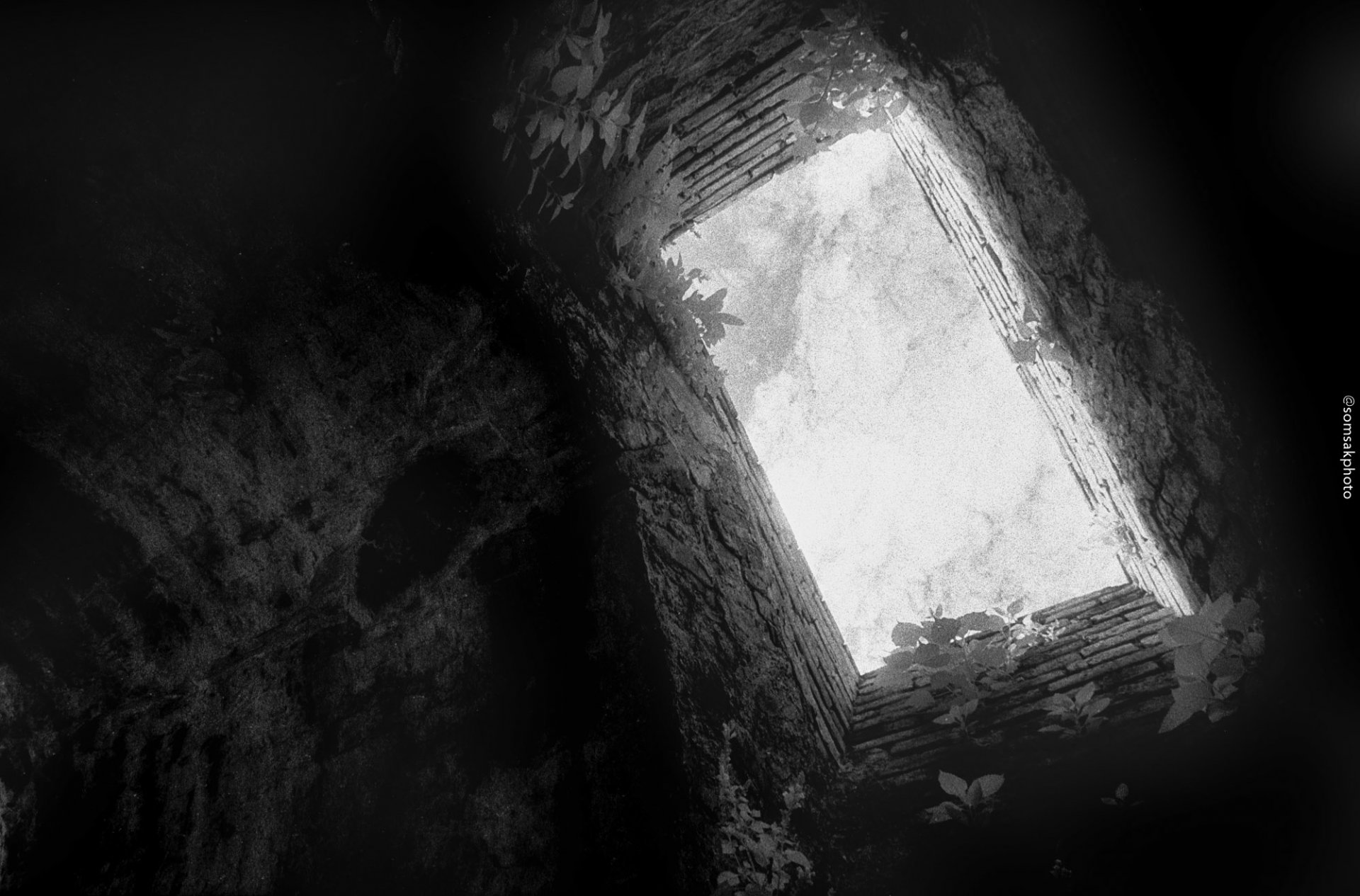
All three series were captured using black-and-white infrared film, delivering the exact kind of striking beauty I had anticipated. However, what truly caught my attention, beyond the aesthetics, was how the concept of "roots" is explored through various lenses. It delves into the essence of Thainess and the cultural prosperity passed down since ancient times. This heritage acts like a strong, deeply anchored taproot that eventually sprouts in a different location, giving rise to something entirely new like the Sanctuary of Truth in Chonburi. In the context of Brahmin-Hindu beliefs, this transition could beautifully and fittingly be described as an "Avatar" or a reincarnation of that core spirit.
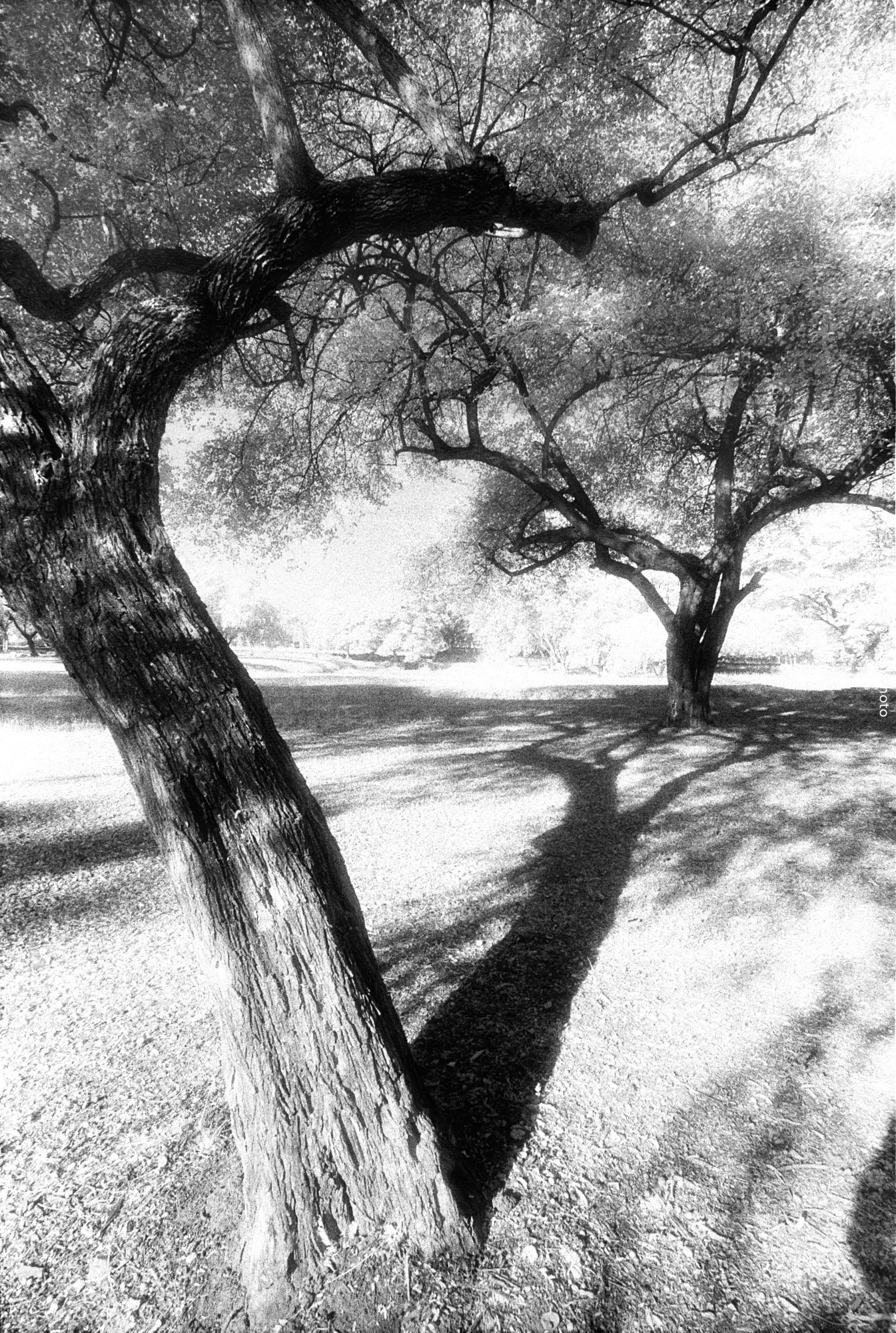
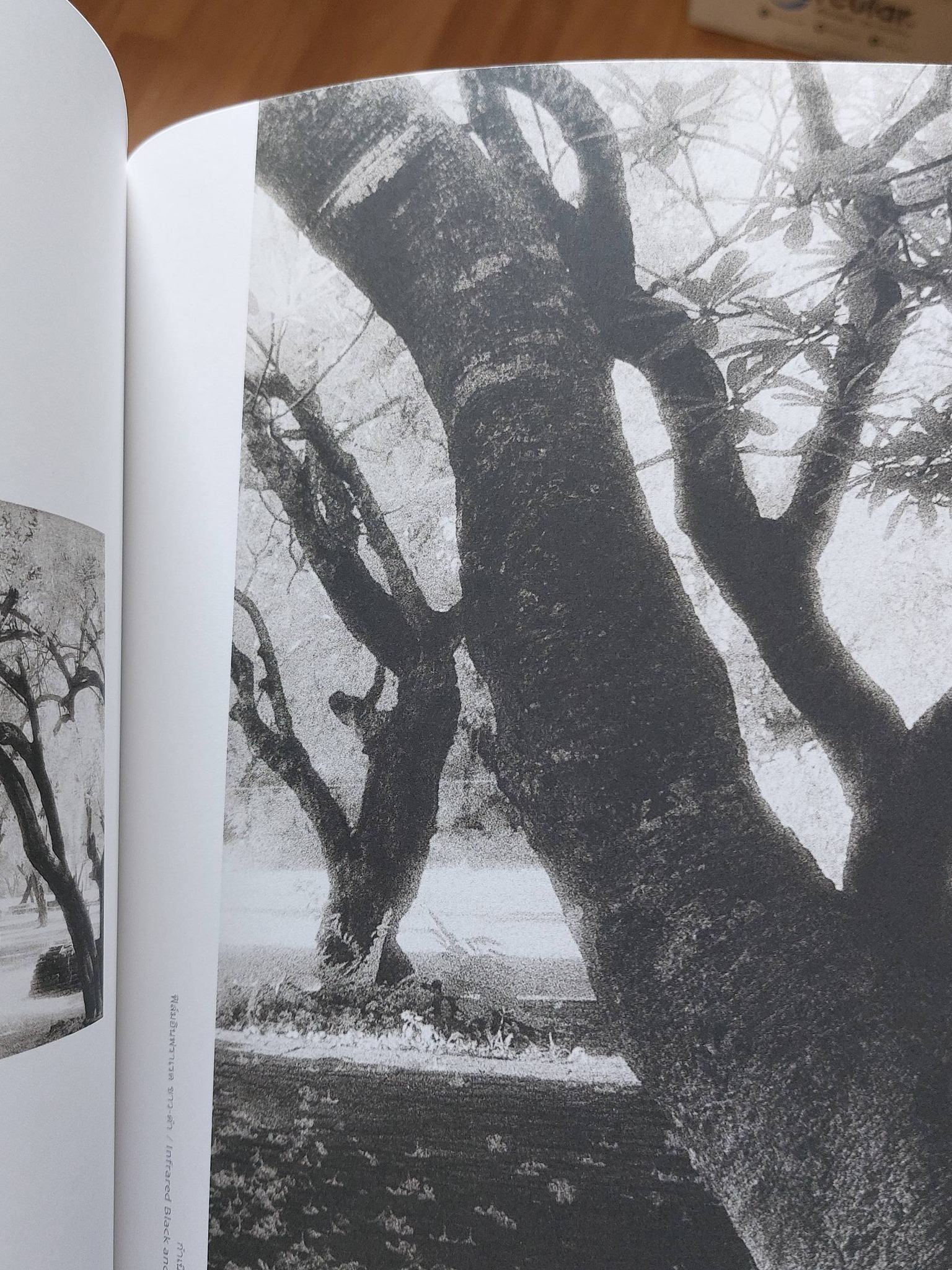
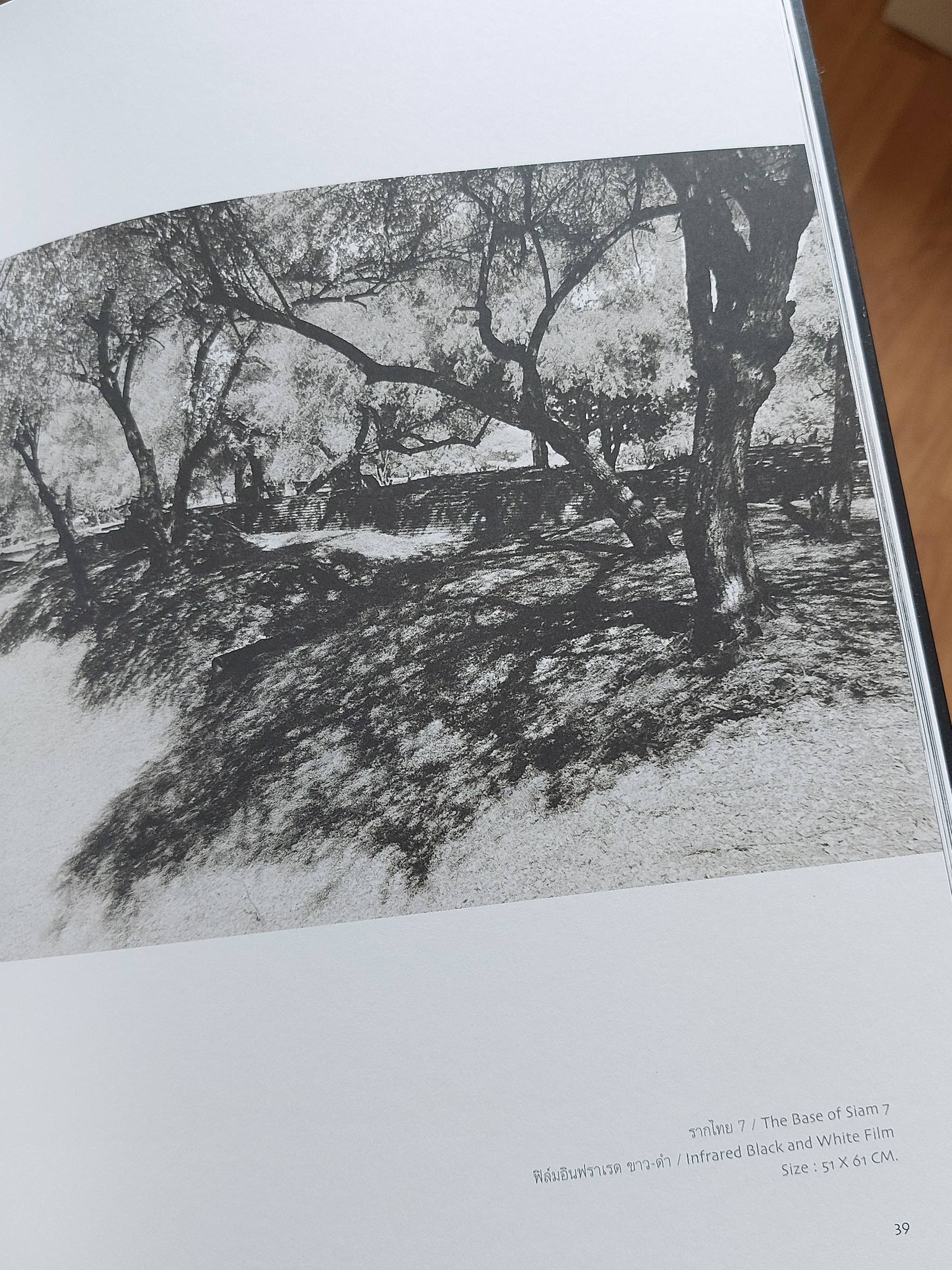
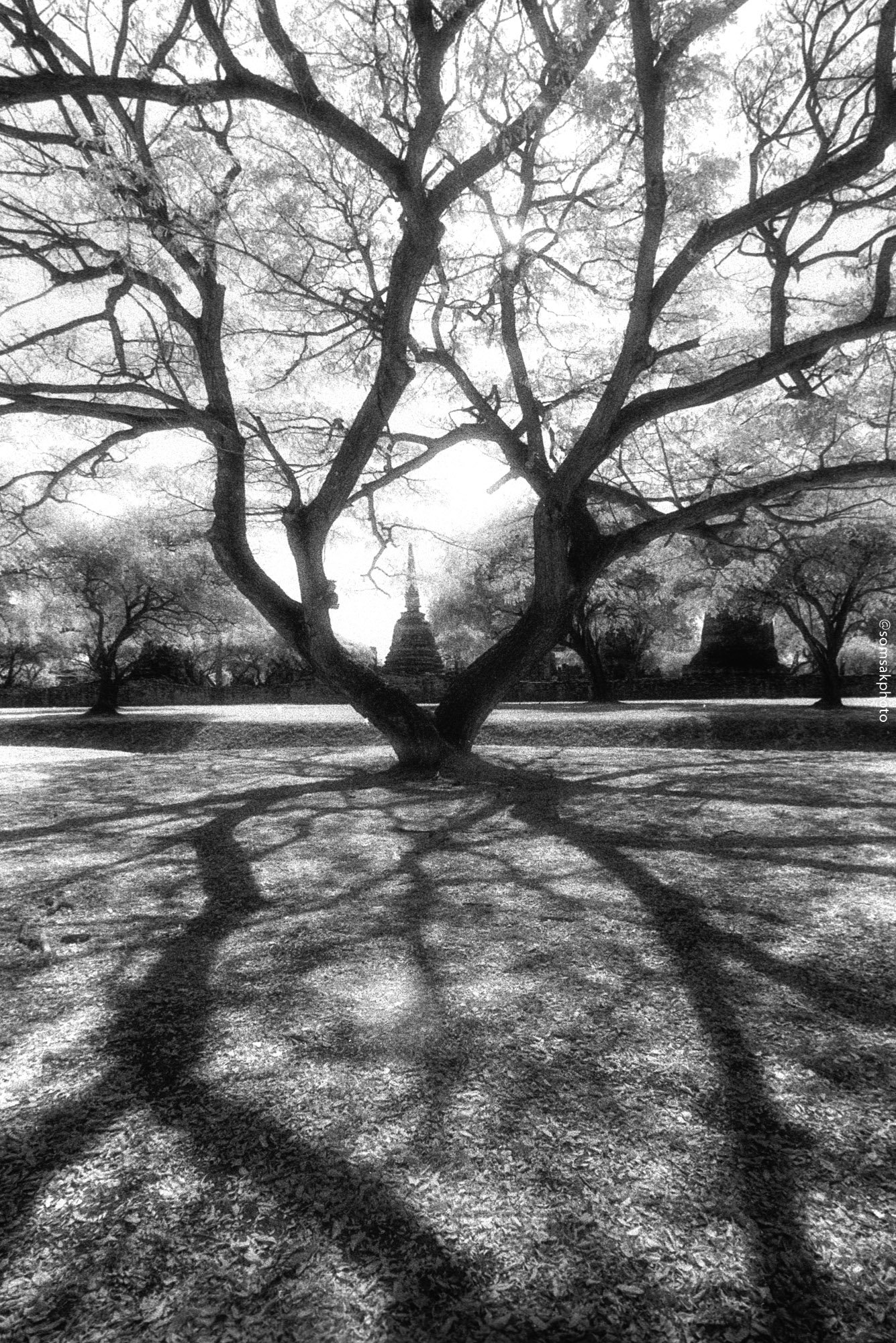
Another fascinating detail I noticed is that the photographs in The Base of Siam do not actually feature many literal roots. Instead, large tree branches are used as visual stand-ins. If you were to turn these images upside down, they would easily resemble "Inverted Roots." I am not entirely sure if Somsak intended this, though I highly suspect he did, given the striking similarity in form. Either way, it serves as an intriguing symbol that flips the conventional meaning of a root. Instead of drawing water and nutrients from the earth, these branches seem to be absorbing a "special signal" from the heavens above.
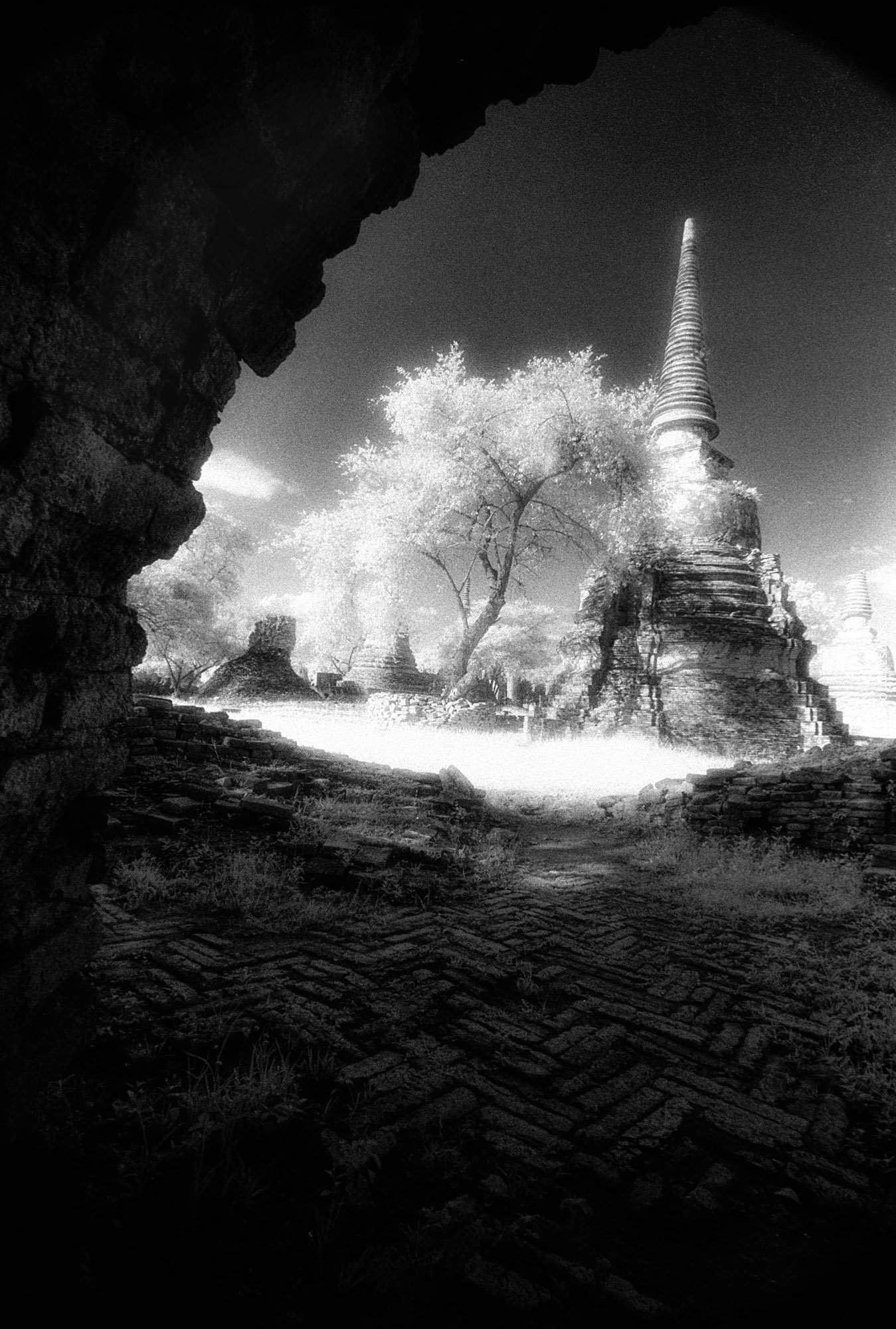
This symbolism extends to the stupas tapering off into the sky, which deeply represent the meticulous refinement of the human mind toward total cessation, or Nirvana, in Buddhist philosophy. These structures feel like another form of root built by human hands. Yet, these roots are bound to decay and erode over time. In Ayutthaya, they can no longer draw sustenance from the heavens or serve as ladders to Nirvana, largely due to human actions. Ironically, the very creators are often the ones who bring about this destruction.
When looking at the photos of the Sanctuary of Truth, there are not as many natural branches as one sees in Ayutthaya. Instead, what sprouts here is entirely man-made, driven by intense faith. These creations function as "Neo-Inverted Roots," once again absorbing divine power or sacred mandates from above, especially if we view the sanctuary as a bridge to the gods. Bound by shared faith, people continue to sustain and pass down this beauty and spiritual wisdom of Thai culture, keeping it alive until the next inevitable turn in the cycle of human change arrives.


Rak Thai
June 2, 2026
ผู้เขียนได้รับหนังสือจาก สมศักดิ์ พัฒนพิฑูรย์ (Somsak Pattanapitoon) เป็นหนังสือภาพถ่ายที่เห็นมานานมากแล้ว แต่ยังไม่เคยได้ดูทั้งชุด ชื่อหนังสือว่า "รากไทย" (The Base of Siam, 2005–2007) เลยได้ดูภาพทั้งชุดก็ครั้งนี้เอง และได้รู้ว่ามีเป็นแบบไตรภาค (Trilogy) คือ รากไทย, สุโข+ไท, และ เมืองกรุง เมืองเทพ รวมกันเป็น "สามกรุง" คือ 3 ราชธานีไทย งานชุดนี้จัดเป็น photo book ของช่างภาพไทยที่ควรมีไว้และศึกษา เพราะมีแนวคิดเบื้องหลัง นอกเหนือจากความสวยงามตามปกติของภาพถ่ายไทยในยุคนั้น
ทั้ง 3 ชุดเป็นภาพถ่ายที่ถ่ายด้วยฟิล์มอินฟราเรดขาวดำ มีความสวยงามตามที่คิดไว้ล่วงหน้า หากสิ่งที่น่าสนใจนอกจากความสวยงามคือ การเห็น "ราก" ในมุมมองต่าง ๆ ทั้งในเรื่องความเป็นไทย ความเจริญทางวัฒนธรรมที่สืบทอดกันมาตั้งแต่ยุคโบราณ เปรียบเหมือนรากแก้วที่แข็งแรง หยั่งลึกลงไป กระทั่งไปแทงยอดในอีกพื้นที่หนึ่ง จนกลายเป็นสิ่งใหม่อย่าง "ปราสาทสัจธรรม" ที่จังหวัดชลบุรี ที่อาจเรียกว่าเป็นการ "อวตาร" (Avatar) ได้หากคิดในแง่ของคติความเชื่อของพราหมณ์-ฮินดู ซึ่งก็ดูจะเข้ากันได้พอเหมาะพอเจาะกับบริบทนี้
อีกมุมมองหนึ่งที่สังเกตได้ และน่าสนใจคือ ภาพถ่ายของ "รากไทย" ไม่ได้มีภาพของ "ราก" มากนัก แต่กลับใช้กิ่งไม้ใหญ่เป็นภาพแทน ซึ่งถ้าหากกลับหัวลง มันจะกลายเป็นภาพของ "รากกลับหัว" (Inverted Roots) ได้เหมือนกัน ซึ่งไม่แน่ใจว่าสมศักดิ์เองตั้งใจอย่างนั้นไหม (ส่วนตัวคิดว่าน่าจะตั้งใจ เพราะรูปทรงคล้ายกัน) แต่ก็จัดว่าเป็นสัญลักษณ์แปลกประหลาด ที่ได้เห็นการกลับด้านในความหมายของราก เพราะแทนที่รากจะดูดน้ำ และสารอาหารจากพื้นดิน แต่กลับกำลังดูดซับ “สัญญาณพิเศษ” จากสวรรค์ด้านบนแทน
รวมไปถึงเหล่าเจดีย์ที่มียอดแหลมขึ้นไปบนท้องฟ้า ที่เป็นสัญลักษณ์อันลึกซึ้งแทนการขัดเกลาจิตใจอย่างละเอียด ประณีต จนดับไม่เหลือ หรือนิพพาน (Nirvana) ตามคติของทางพุทธศาสนา ก็ดูจะเป็นรากอีกรูปแบบหนึ่งที่มนุษย์สร้างขึ้น หากแต่ ราก (เจดีย์) ก็มักกร่อนสลายและเสื่อมไปตามวงรอบ และที่อยุธยานั้นไม่สามารถดูดสารอาหารจากสวรรค์ หรือไต่บันไดนิพพานได้อีกต่อไป อันเนื่องมาจากน้ำมือมนุษย์ด้วยกันเองเป็นส่วนใหญ่ โดยตัวคนสร้างเองก็มักจะเป็นส่วนหนึ่งในการทำลายนี้
และหากสังเกตชุดภาพถ่ายของปราสาทสัจธรรม ดูจะไม่ได้มีกิ่งก้านต้นไม้มากเหมือนอย่างที่อยุธยา แต่หากมีสิ่งที่งอกขึ้นมาด้วยมือมนุษย์ที่มีศรัทธาแรงกล้า สิ่งเหล่านี้ก็คือ "รากกลับหัวใหม่" (Neo-Inverted Roots) ที่กำลังดูดซับอำนาจ หรือโองการศักดิ์สิทธิ์จากสวรรค์อีกครั้ง (หากเปรียบว่า ปราสาท คือการเชื่อมโยงกับเทพเจ้าตามคติความเชื่อ) โดยมีเหล่าผู้คนที่ศรัทธา ช่วยกันอุ้มชูและสืบทอดความงาม-ความศักดิ์สิทธิ์ทางภูมิปัญญาของไทยนี้ต่อไป จนกว่าวงรอบใหม่ในวัฏจักรการเปลี่ยนแปลงของมนุษย์จะมาถึง
ทั้ง 3 ชุดเป็นภาพถ่ายที่ถ่ายด้วยฟิล์มอินฟราเรดขาวดำ มีความสวยงามตามที่คิดไว้ล่วงหน้า หากสิ่งที่น่าสนใจนอกจากความสวยงามคือ การเห็น "ราก" ในมุมมองต่าง ๆ ทั้งในเรื่องความเป็นไทย ความเจริญทางวัฒนธรรมที่สืบทอดกันมาตั้งแต่ยุคโบราณ เปรียบเหมือนรากแก้วที่แข็งแรง หยั่งลึกลงไป กระทั่งไปแทงยอดในอีกพื้นที่หนึ่ง จนกลายเป็นสิ่งใหม่อย่าง "ปราสาทสัจธรรม" ที่จังหวัดชลบุรี ที่อาจเรียกว่าเป็นการ "อวตาร" (Avatar) ได้หากคิดในแง่ของคติความเชื่อของพราหมณ์-ฮินดู ซึ่งก็ดูจะเข้ากันได้พอเหมาะพอเจาะกับบริบทนี้
อีกมุมมองหนึ่งที่สังเกตได้ และน่าสนใจคือ ภาพถ่ายของ "รากไทย" ไม่ได้มีภาพของ "ราก" มากนัก แต่กลับใช้กิ่งไม้ใหญ่เป็นภาพแทน ซึ่งถ้าหากกลับหัวลง มันจะกลายเป็นภาพของ "รากกลับหัว" (Inverted Roots) ได้เหมือนกัน ซึ่งไม่แน่ใจว่าสมศักดิ์เองตั้งใจอย่างนั้นไหม (ส่วนตัวคิดว่าน่าจะตั้งใจ เพราะรูปทรงคล้ายกัน) แต่ก็จัดว่าเป็นสัญลักษณ์แปลกประหลาด ที่ได้เห็นการกลับด้านในความหมายของราก เพราะแทนที่รากจะดูดน้ำ และสารอาหารจากพื้นดิน แต่กลับกำลังดูดซับ “สัญญาณพิเศษ” จากสวรรค์ด้านบนแทน
รวมไปถึงเหล่าเจดีย์ที่มียอดแหลมขึ้นไปบนท้องฟ้า ที่เป็นสัญลักษณ์อันลึกซึ้งแทนการขัดเกลาจิตใจอย่างละเอียด ประณีต จนดับไม่เหลือ หรือนิพพาน (Nirvana) ตามคติของทางพุทธศาสนา ก็ดูจะเป็นรากอีกรูปแบบหนึ่งที่มนุษย์สร้างขึ้น หากแต่ ราก (เจดีย์) ก็มักกร่อนสลายและเสื่อมไปตามวงรอบ และที่อยุธยานั้นไม่สามารถดูดสารอาหารจากสวรรค์ หรือไต่บันไดนิพพานได้อีกต่อไป อันเนื่องมาจากน้ำมือมนุษย์ด้วยกันเองเป็นส่วนใหญ่ โดยตัวคนสร้างเองก็มักจะเป็นส่วนหนึ่งในการทำลายนี้
และหากสังเกตชุดภาพถ่ายของปราสาทสัจธรรม ดูจะไม่ได้มีกิ่งก้านต้นไม้มากเหมือนอย่างที่อยุธยา แต่หากมีสิ่งที่งอกขึ้นมาด้วยมือมนุษย์ที่มีศรัทธาแรงกล้า สิ่งเหล่านี้ก็คือ "รากกลับหัวใหม่" (Neo-Inverted Roots) ที่กำลังดูดซับอำนาจ หรือโองการศักดิ์สิทธิ์จากสวรรค์อีกครั้ง (หากเปรียบว่า ปราสาท คือการเชื่อมโยงกับเทพเจ้าตามคติความเชื่อ) โดยมีเหล่าผู้คนที่ศรัทธา ช่วยกันอุ้มชูและสืบทอดความงาม-ความศักดิ์สิทธิ์ทางภูมิปัญญาของไทยนี้ต่อไป จนกว่าวงรอบใหม่ในวัฏจักรการเปลี่ยนแปลงของมนุษย์จะมาถึง
© CTypeMag 2016 - 2026

